Casting Courses
We we set out to learning something, it's always best to have a plan or a structure, especially went it's a skill like fly casting that has both mental and physical aspects. The courses outlined below are broken down into Basic, Intermediate, and Advanced levels.
The Basic level is intended for the newcomer to the sport who has little or no experience casting a fly. The Basic Spey casting courses are intended for newcomers to that style of casting, though they may be experienced overhead casters.
The Intermediate level is intended for anglers who have the basic skills mastered, but wish to add capability or improve on what they already know.
The Advanced level would best fit experienced anglers who need a second pair of eyes to help them fine tune their skills or add advanced level casts.
Please review this course list for one that suits you. You can book a course through email or contact me directly at 905-768-8010.
We we set out to learning something, it's always best to have a plan or a structure, especially went it's a skill like fly casting that has both mental and physical aspects. The courses outlined below are broken down into Basic, Intermediate, and Advanced levels.
The Basic level is intended for the newcomer to the sport who has little or no experience casting a fly. The Basic Spey casting courses are intended for newcomers to that style of casting, though they may be experienced overhead casters.
The Intermediate level is intended for anglers who have the basic skills mastered, but wish to add capability or improve on what they already know.
The Advanced level would best fit experienced anglers who need a second pair of eyes to help them fine tune their skills or add advanced level casts.
Please review this course list for one that suits you. You can book a course through email or contact me directly at 905-768-8010.
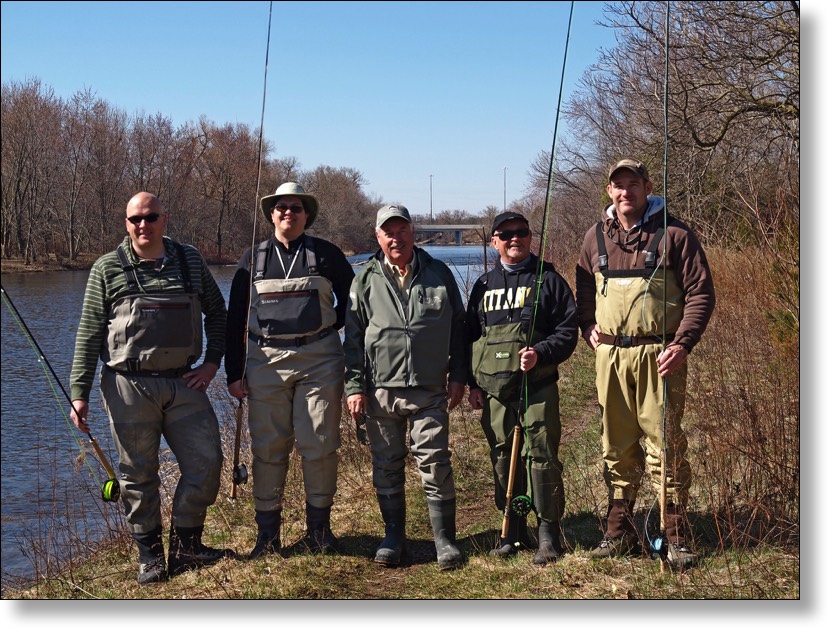
Learn and Fish
This six hour course is divided up into three hours of learning followed by three hours of fishing. The course is an excellent way to introduce the newcomer to the world of fly fishing. It is an ideal course for anyone who has never fished using a fly rod and would like to find out if it is right for them. This course is ideal for anyone with little to no fishing experience.
The course will cover:
Fly rods, reels and lines will be supplied for the course.
This six hour course is divided up into three hours of learning followed by three hours of fishing. The course is an excellent way to introduce the newcomer to the world of fly fishing. It is an ideal course for anyone who has never fished using a fly rod and would like to find out if it is right for them. This course is ideal for anyone with little to no fishing experience.
The course will cover:
- What is fly fishing
- How do we use a fly to catch a fish
- The four types of fly fishing, dry fly, wet fly, nymph and streamer
- The basics of the tackle, including rods, reels, lines, and leaders
- The basics of a fly cast
- How to make the basic fishing casts
- Three hours of catching fish
Fly rods, reels and lines will be supplied for the course.
Introduction to Fly Fishing
This two hour course will introduce the newcomer to the world of fly fishing. It is an ideal course for anyone who has never fished using a fly rod and would like to find out if it is right for them. It is also a good start for anyone wishing to get into the sport. This course is ideal for anyone with little to no fishing experience.
The course will cover:
This course can run consecutively with Basic - Fly Casting so that the client can end the day with the ability to cast a fly line and catch a fish with it.
Trout fly rods, reels and lines will be supplied for the course.
This two hour course will introduce the newcomer to the world of fly fishing. It is an ideal course for anyone who has never fished using a fly rod and would like to find out if it is right for them. It is also a good start for anyone wishing to get into the sport. This course is ideal for anyone with little to no fishing experience.
The course will cover:
- What is fly fishing
- How do we use a fly to catch a fish
- The four types of fly fishing, dry fly, wet fly, nymph and streamer
- The basics of the tackle, including rods, reels, lines, and leaders
- The basics of a fly cast
This course can run consecutively with Basic - Fly Casting so that the client can end the day with the ability to cast a fly line and catch a fish with it.
Trout fly rods, reels and lines will be supplied for the course.
Fly Casting
This two hour course is suitable for anyone who has little to no fly fishing experience. The course is primarily about learning how to cast a fly line. By the end of the course, the client will be able to make casts at typical fishing distances using a standard trout fly rod.
The course will cover:
This course can run consecutively with Basic - Introduction to Fly Fishing so that the client can gain an understanding of fly fishing as well as the casting.
Trout fly rods, reels and lines will be supplied for the course, though the client is welcome to bring their own fly fishing tackle.
This two hour course is suitable for anyone who has little to no fly fishing experience. The course is primarily about learning how to cast a fly line. By the end of the course, the client will be able to make casts at typical fishing distances using a standard trout fly rod.
The course will cover:
- Stance
- Grip
- Making fore and back casts (false casting)
- Pick up and lay down of the fly line
- Shooting line
- Basics of loop control
This course can run consecutively with Basic - Introduction to Fly Fishing so that the client can gain an understanding of fly fishing as well as the casting.
Trout fly rods, reels and lines will be supplied for the course, though the client is welcome to bring their own fly fishing tackle.
Fly Casting and Fishing
This four hour course is suitable for a conventional tackle angler who wishes to add fly fishing to his repertoire. The course will assume that the client has some fishing experience. By the end of the course, the client will be able to make casts at typical fishing distances using a standard trout fly rod. The client will also have basic knowledge on how to present a dry fly, nymph and streamer. The course will cover:
Trout fly rods, reels and lines will be supplied for the course, though the client is welcome to bring their own fly fishing tackle.
This four hour course is suitable for a conventional tackle angler who wishes to add fly fishing to his repertoire. The course will assume that the client has some fishing experience. By the end of the course, the client will be able to make casts at typical fishing distances using a standard trout fly rod. The client will also have basic knowledge on how to present a dry fly, nymph and streamer. The course will cover:
- Stance
- Grip
- Making fore and back casts (false casting)
- Pick up and lay down of the fly line
- Shooting line
- Basics of loop control
- Dry fly fishing
- Wet fly fishing
- Nymph Fishing
- Streamer fishing
Trout fly rods, reels and lines will be supplied for the course, though the client is welcome to bring their own fly fishing tackle.
Introduction to Spey Casting
Any newcomer moving from the trout world to the world of Spey casting and double handed rods, will find the plethora of lines and casting methods a bit overwhelming. Trying to sort it out by ourselves can be quite a challenge. Listening to proponents of each method can leave us perplexed as they often contradict each other. It’s not uncommon for a newcomer to have difficulty making sense of this Spey cacophony and figure out which side of the argument he or she is on. The objective of this course is to demonstrate in a clear and unbiased manner each of the three styles of Spey casting so that by the end of the course, the client will be in a position to choose the right method for him or her.
The two hour course is all about introducing the newcomer to the three Spey casting methods: Traditional, Scandinavian, and Skagit, plus the tackle associated with them. The client will be able to try his or hand at the rods and lines, observing how they are used to fish. They will be able to try these methods in a fishing situation and learn which one best suits how and where they like to fish.
The two course will include:
The four hour course will include all of the above plus two hours of casting instruction on the method most preferred by the client.
This is an ideal course for a group of people who would like to learn about the world of Spey casting. All necessary equipment will be supplied with the exception of rain gear and waders. Clients are welcome to bring their own tackle.
Any newcomer moving from the trout world to the world of Spey casting and double handed rods, will find the plethora of lines and casting methods a bit overwhelming. Trying to sort it out by ourselves can be quite a challenge. Listening to proponents of each method can leave us perplexed as they often contradict each other. It’s not uncommon for a newcomer to have difficulty making sense of this Spey cacophony and figure out which side of the argument he or she is on. The objective of this course is to demonstrate in a clear and unbiased manner each of the three styles of Spey casting so that by the end of the course, the client will be in a position to choose the right method for him or her.
The two hour course is all about introducing the newcomer to the three Spey casting methods: Traditional, Scandinavian, and Skagit, plus the tackle associated with them. The client will be able to try his or hand at the rods and lines, observing how they are used to fish. They will be able to try these methods in a fishing situation and learn which one best suits how and where they like to fish.
The two course will include:
- Introduction to two-handed overhead casting
- Introduction to traditional Spey casting and tackle
- Introduction to the Scandinavian Spey casting and typical shooting head tackle
- Introduction to Skagit Spey casting and typical sinktip tackle
- Introduction to swung fly fishing
The four hour course will include all of the above plus two hours of casting instruction on the method most preferred by the client.
This is an ideal course for a group of people who would like to learn about the world of Spey casting. All necessary equipment will be supplied with the exception of rain gear and waders. Clients are welcome to bring their own tackle.
Spey Casting
This course is intended for the beginner with little or no Spey casting experience. We will cover:
By the end of the four hour session, the client will be able to make these three casts with reasonable proficiency.
This course is intended for the beginner with little or no Spey casting experience. We will cover:
- the fundamentals of a two-handed overhead cast
- the fundamentals of Spey casting
- the Switch cast
- the Single Spey or Circle Spey
- the Double Spey
By the end of the four hour session, the client will be able to make these three casts with reasonable proficiency.
Refresher Spey Casting
This two or four hour course is intended for someone who has done some Spey casting in the past, but hasn’t had much opportunity to use it. They need to refresh their skills. We will cover the same material as in the Basics course, but with an emphasis on building on what Spey casting abilities the client already possesses. This is also a good course for someone wishing to start casting with their non-dominant hand up (i.e. a righty casting left hand up). The course will include:
By the end of the session, the client will be able to make these casts with reasonable proficiency.
This two or four hour course is intended for someone who has done some Spey casting in the past, but hasn’t had much opportunity to use it. They need to refresh their skills. We will cover the same material as in the Basics course, but with an emphasis on building on what Spey casting abilities the client already possesses. This is also a good course for someone wishing to start casting with their non-dominant hand up (i.e. a righty casting left hand up). The course will include:
- the fundamentals of Spey casting
- the Switch cast
- the Single Spey
- the Double Spey
- any other cast the student wishes to practice
By the end of the session, the client will be able to make these casts with reasonable proficiency.
Double Hand Rod Fishing
It’s fairly common for an experienced angler to suddenly find his/her catch rate drop way off when they begin swinging flies with double-handed (DH) rods. This two hour course is intended to help newcomers to DH rods, adjust their fishing tactics to the long rod. Subjects covered will include:
By the end of this two hour session, the client will be able to swing a fly to a fish with the confidence that the fly is where he wants it to be.
It’s fairly common for an experienced angler to suddenly find his/her catch rate drop way off when they begin swinging flies with double-handed (DH) rods. This two hour course is intended to help newcomers to DH rods, adjust their fishing tactics to the long rod. Subjects covered will include:
- Mending and controlling line
- Knowing that your fly is in the zone
- Picking the right water
- Casting and using sinktips efficiently
- Matching flies, leaders, sinktips, and lines so that they perform as intended
By the end of this two hour session, the client will be able to swing a fly to a fish with the confidence that the fly is where he wants it to be.
Tackle Review
Making sure that the line matches the rod is a normal part of any of the courses. However, this two hour course takes things a step further by teaching the client how to make their own tackle matching determinations and end the tyranny of living with a bad rod / line fit.
This two hour course will cover:
The process will involve the client in assessing various lines and rod combinations, plus the effect of adding tips and polyleaders into the mix. To achieve this, the client will be given a variety of tackle combinations and learn how to tell what is wrong or right with the combination. He/she will also see and feel the effects of adding tips and polyleaders.
This course will help the client avoid costly mistakes of buying expensive, unsuitable lines. Avoiding just one bad purchase easily covers the cost of the course.
Making sure that the line matches the rod is a normal part of any of the courses. However, this two hour course takes things a step further by teaching the client how to make their own tackle matching determinations and end the tyranny of living with a bad rod / line fit.
This two hour course will cover:
- How to determine if a rod is over or underlined
- Assessing turnover and the effects of tips vs. polyleaders
- Assessing the suitability of the line type for the rod
- Finding out what is the best rod / line combination for the student
The process will involve the client in assessing various lines and rod combinations, plus the effect of adding tips and polyleaders into the mix. To achieve this, the client will be given a variety of tackle combinations and learn how to tell what is wrong or right with the combination. He/she will also see and feel the effects of adding tips and polyleaders.
This course will help the client avoid costly mistakes of buying expensive, unsuitable lines. Avoiding just one bad purchase easily covers the cost of the course.
Single Hand Spey Casting
Spey casting is not just for two handed rods. This two or four hour course will introduce the fly fisher to the Single Spey and the Snake Roll, executed with a single handed rod. If the client wishes, we can also include the Double Spey. If the client uses sinking lines, we can cover how to use Spey casts to help lift them.
Spey casting is not just for two handed rods. This two or four hour course will introduce the fly fisher to the Single Spey and the Snake Roll, executed with a single handed rod. If the client wishes, we can also include the Double Spey. If the client uses sinking lines, we can cover how to use Spey casts to help lift them.
Traditional Spey
In this four hour course, we will work on refining the Single, Double and Snake Roll casts, using tips and techniques to add consistency and distance. The client should already be able to make at least two of these casts with a degree of proficiency. Alternately, a client who had started to learn a different style of casting, may use this course as a style change opportunity.
In this four hour course, we will work on refining the Single, Double and Snake Roll casts, using tips and techniques to add consistency and distance. The client should already be able to make at least two of these casts with a degree of proficiency. Alternately, a client who had started to learn a different style of casting, may use this course as a style change opportunity.
Skagit
In this four course, we will introduce the Skagit casts:
The casts can be taught either using conventional WF short head Spey lines using conventional anchor technique, or the sustained anchor method with dedicated Skagit lines. The course will be taught with sinktips in place as this is primarily a sinktip style of fishing. The client should choose which style is best suited for them before the start of the course. If necessary, some time will be set aside in the beginning to discussing the styles and to make the choice. From there the course will proceed covering only one of the styles as it’s too confusing to try an alternate between the two.
To take this course, the client should be able to make at least two Spey casts with a degree of proficiency.
In this four course, we will introduce the Skagit casts:
- Perry Poke
- Snap T or Circle Spey
- Double Spey
The casts can be taught either using conventional WF short head Spey lines using conventional anchor technique, or the sustained anchor method with dedicated Skagit lines. The course will be taught with sinktips in place as this is primarily a sinktip style of fishing. The client should choose which style is best suited for them before the start of the course. If necessary, some time will be set aside in the beginning to discussing the styles and to make the choice. From there the course will proceed covering only one of the styles as it’s too confusing to try an alternate between the two.
To take this course, the client should be able to make at least two Spey casts with a degree of proficiency.
Scandinavian
This four hour course will cover the essence of the Underhand Cast using floating shooting heads and long leaders. We will cover the mechanics of the Underhand and how they are used to develop the high line speed of the method. We will begin with the Underhand version of the Single Spey and once that has been mastered, we’ll move on to how to graft the Underhand power stroke onto other casts.
To take this course, the client should be able to make at least two Spey casts with a degree of proficiency.
This four hour course will cover the essence of the Underhand Cast using floating shooting heads and long leaders. We will cover the mechanics of the Underhand and how they are used to develop the high line speed of the method. We will begin with the Underhand version of the Single Spey and once that has been mastered, we’ll move on to how to graft the Underhand power stroke onto other casts.
To take this course, the client should be able to make at least two Spey casts with a degree of proficiency.
Overhead
This two hour course covers the various methods of making an overhead cast with a two-handed rod. Sounds simple in principle for an experienced single hand caster to do the same with a DH rod, however there are a number of techniques that make two hand overhead casting much more proficient. Overhead casting with two-handed rods is an often overlooked method, but it has many applications whenever there is the casting room.
We will cover overhead casting with any style of Spey line of the client’s choosing. If no style is chosen, we will gravitate to using shooting heads as these lines are the simplest to overhead cast well.
To take this course, the client should be able to make at least two Spey casts with a degree of proficiency.
This two hour course covers the various methods of making an overhead cast with a two-handed rod. Sounds simple in principle for an experienced single hand caster to do the same with a DH rod, however there are a number of techniques that make two hand overhead casting much more proficient. Overhead casting with two-handed rods is an often overlooked method, but it has many applications whenever there is the casting room.
We will cover overhead casting with any style of Spey line of the client’s choosing. If no style is chosen, we will gravitate to using shooting heads as these lines are the simplest to overhead cast well.
To take this course, the client should be able to make at least two Spey casts with a degree of proficiency.
Distance Spey Casting
Being able to Spey cast far just isn't about showing off; it has very practical real world benefits. One of the biggest involves the reduction of effort. If an angler can cast a maximum of a 100' then casting 70' all day requires very little effort. And of course it let's us reach lies that others cannot plus opens up presentation opportunities.
The course can be either two or four hours and concentrates on developing distance casting with minimal effort. We concentrate on maximizing the efficiency of the cast rather than simply using more force. As a result we cad t farther using the same or less effort than before.
Being able to Spey cast far just isn't about showing off; it has very practical real world benefits. One of the biggest involves the reduction of effort. If an angler can cast a maximum of a 100' then casting 70' all day requires very little effort. And of course it let's us reach lies that others cannot plus opens up presentation opportunities.
The course can be either two or four hours and concentrates on developing distance casting with minimal effort. We concentrate on maximizing the efficiency of the cast rather than simply using more force. As a result we cad t farther using the same or less effort than before.
Spey Casting Tuneup
Even experienced Spey casters may have a cast or two that fails to deliver the distance or consistency that they have come to expect from their casting.
The two hour Tuneup course works on eliminating the little glitches that tend to interfere with a good cast. We also look at introducing small adjustment techniques to overcome the problem areas.
This two hour course is a client directed one where we work on whatever component of the cast is producing difficulties. The atmosphere is collegial rather than student-instructor oriented.
Even experienced Spey casters may have a cast or two that fails to deliver the distance or consistency that they have come to expect from their casting.
The two hour Tuneup course works on eliminating the little glitches that tend to interfere with a good cast. We also look at introducing small adjustment techniques to overcome the problem areas.
This two hour course is a client directed one where we work on whatever component of the cast is producing difficulties. The atmosphere is collegial rather than student-instructor oriented.
Sunk Line Fishing
Floating lines and sinktips are quite commonly used in the Great Lakes area, however sunk lines aren’t nearly as popular in large part as there is little opportunity to learn their use. This four hour course will concentrate on the various lifts available to clear a sunk line from the water and emphasis will be placed on avoiding the roll cast. We look at the roll cast as the last gasp option.
Fishing and controlling the full sinker is also a bit of a black art as the line can’t be seen during the swing. We will cover how to control the line during the swing, including initial mends, tension and rod position. We will also examine how to choose the best full sinker for the job at hand and how best to employ it.
Floating lines and sinktips are quite commonly used in the Great Lakes area, however sunk lines aren’t nearly as popular in large part as there is little opportunity to learn their use. This four hour course will concentrate on the various lifts available to clear a sunk line from the water and emphasis will be placed on avoiding the roll cast. We look at the roll cast as the last gasp option.
Fishing and controlling the full sinker is also a bit of a black art as the line can’t be seen during the swing. We will cover how to control the line during the swing, including initial mends, tension and rod position. We will also examine how to choose the best full sinker for the job at hand and how best to employ it.
Spey Casting Style Change
The challenge in changing casting styles for any experienced Spey caster, is that they are so proficient with their style, that it is sometimes difficult to unlearn it enough to allow a new style to be adopted. A typical example is the pause common in the backcast of a traditional Single Spey. When the experienced angler tries to learn the Sustained Anchor of Skagit casting, there’s a tendency to pause in the backcast, resulting in a loss of load. Our experienced caster knows the pause should not be there, but the body won’t obey that knowledge and continues to pause. The experienced Spey caster knows exactly how to execute the new cast, but the many years of casting a different style keep getting in the way.
This two or four hour course is a client directed one where we work on whatever component of the style change is producing difficulties. We work on developing little techniques that overcome the types of problems inherent in changing styles. The atmosphere is collegial rather than student-instructor oriented.
The challenge in changing casting styles for any experienced Spey caster, is that they are so proficient with their style, that it is sometimes difficult to unlearn it enough to allow a new style to be adopted. A typical example is the pause common in the backcast of a traditional Single Spey. When the experienced angler tries to learn the Sustained Anchor of Skagit casting, there’s a tendency to pause in the backcast, resulting in a loss of load. Our experienced caster knows the pause should not be there, but the body won’t obey that knowledge and continues to pause. The experienced Spey caster knows exactly how to execute the new cast, but the many years of casting a different style keep getting in the way.
This two or four hour course is a client directed one where we work on whatever component of the style change is producing difficulties. We work on developing little techniques that overcome the types of problems inherent in changing styles. The atmosphere is collegial rather than student-instructor oriented.