
How Canadian Players Are Choosing the Best USDT Casino in 2026: A Guide to Crypto Payouts, Security, and Fair Play
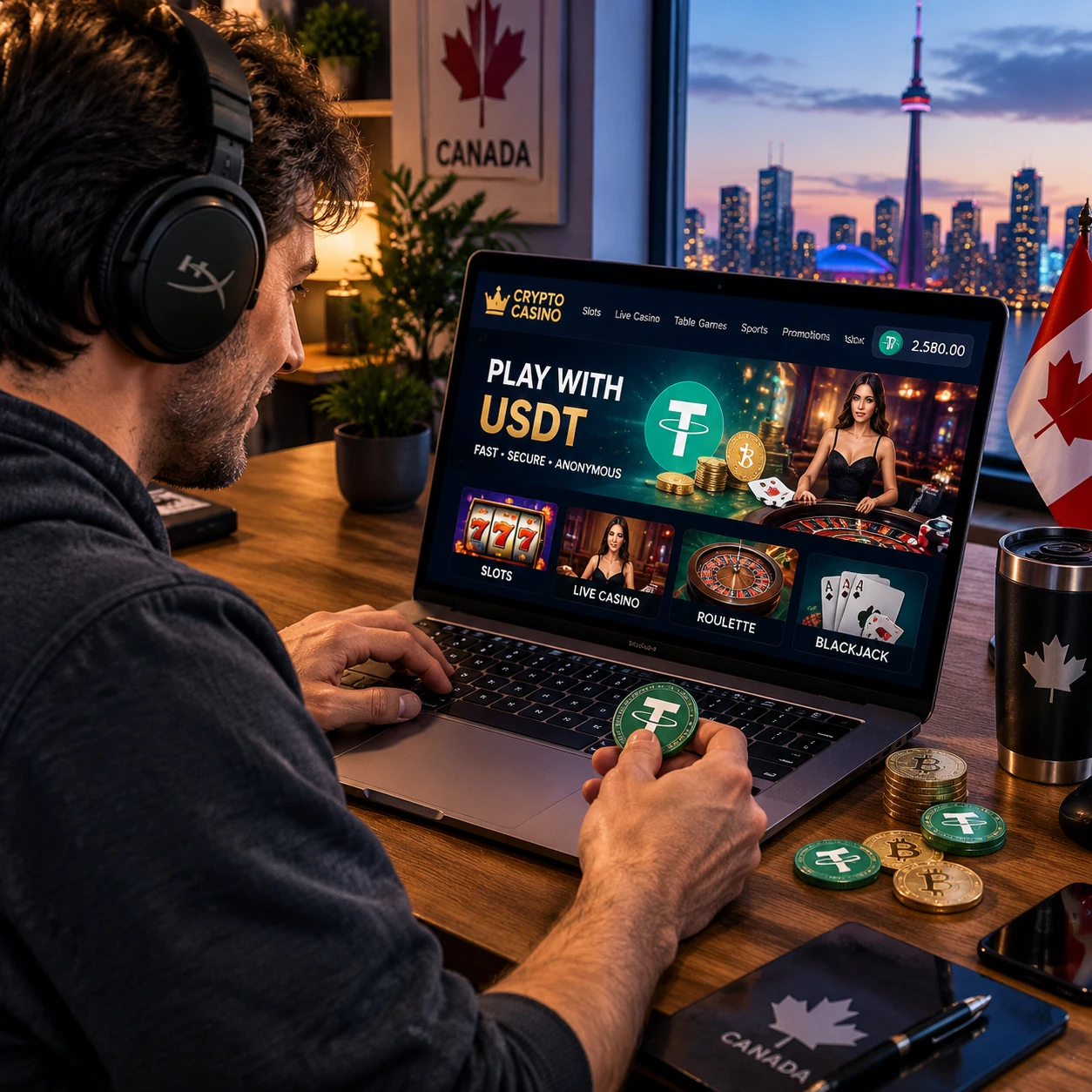
I've noticed something shift in how Canadians gamble online over the past couple of years, and it's hard to miss if you spend any real time in gambling forums or Discord servers. USDT quietly became my go-to payment method, and honestly? Once I looked at the numbers, it made total sense. Between slow e-transfer processing, banks flagging gambling transactions out of nowhere, and the general headache of traditional payment rails, I kept running into the same wall. More and more players are turning to stablecoins because the alternative just... isn't working for them anymore. But with that shift comes a whole new set of questions. How do I know which platform is actually safe? What does a legitimate payout process even look like in practice? This guide walks through what I think Canadian players in 2026 should be paying attention to before they deposit a single dollar's worth of Tether.
Why USDT Is Becoming the Go-To Currency for Canadian Casino Players
Stablecoins solved a problem Bitcoin never really addressed for casual gamblers: price volatility. Nobody wants to deposit $200 worth of crypto only to watch it swing to $160 by the time they're ready to cash out — or vice versa, which sounds great until the tax questions start popping up. USDT, pegged roughly 1:1 to the US dollar, removes that guesswork entirely. What I deposit is, give or take a cent, what I can expect to withdraw in value terms.
For Canadian players specifically, the appeal goes beyond price stability. Traditional banking here has grown increasingly cautious around gambling transactions. Some banks outright block transfers to known gambling sites; others flag accounts for 'unusual activity' after a few deposits, which is its own kind of annoying phone call to get. USDT sidesteps that friction almost entirely. Transactions settle on the blockchain rather than through a bank's internal review process, which means fewer holds, fewer awkward conversations with my financial institution, and generally more privacy around how I choose to spend my own money.
USDT vs. Traditional Payment Methods in Canada
Interac e-Transfers remain popular in Canada for a reason — they're familiar, and they're instant for regular transactions. But when it comes to gambling specifically, a lot of Canadian banks impose daily limits or extra verification steps that slow everything down. Credit cards come with their own baggage too: cash advance fees, interest rates that make even a modest deposit expensive, and the chance of a decline just because the merchant category code trips a fraud filter. E-wallets like Skrill or Neteller are faster, sure, but they often carry withdrawal fees that chip away at winnings.
USDT transactions, by comparison, typically settle within minutes depending on network congestion, and the fees are usually a fraction of what I'd pay through conventional channels. There's no middleman bank deciding whether my transaction looks 'suspicious.' For players who value a bit of discretion, that matters more than people give it credit for.
Key Factors in Choosing a Secure and Trustworthy USDT Casino
Not every platform accepting USDT deserves my trust, and this is exactly where a lot of newer players get tripped up. The core things worth checking before committing any funds: the casino's licensing jurisdiction, the encryption standards protecting wallet connections and personal data, whether games run on provably fair systems, and what the broader crypto gambling community actually says about the platform's track record with payouts. Marketing copy tells you what a casino wants you to believe. Community feedback tells you what's actually happened.
Provably fair gaming deserves a bit more attention here because it's genuinely useful technology, not just a buzzword. These systems use cryptographic hashing so players can independently verify that game outcomes weren't manipulated after the fact. It's not foolproof against every type of dishonest operator — nothing really is — but a platform that implements provably fair mechanics is at least signaling it takes transparency seriously.
Licensing and Regulatory Considerations for Canadians
Here's something worth understanding clearly: Canada doesn't have a unified federal framework governing online gambling the way, say, the UK Gambling Commission operates. Provinces handle their own regulated offerings, but most crypto casinos serving Canadian players operate under international licenses — commonly from Curacao, Malta, or occasionally the Isle of Man. These licenses vary significantly in how rigorously they enforce player protection standards.
Curacao licenses, for instance, are relatively easy to obtain and don't always guarantee the same oversight you'd get from a Malta Gaming Authority license. That doesn't automatically make a Curacao-licensed casino untrustworthy — plenty of solid operators hold one. But it does mean Canadian players need to do a bit more homework rather than assuming the license badge alone is a seal of safety.
Understanding Crypto Payouts—Speed, Limits, and Transparency
One of the biggest draws of USDT casinos is payout speed. But 'fast' means different things depending on the platform, and I learned that the hard way more than once. Reputable sites typically process withdrawal requests within a few hours to 24 hours internally, after which the actual blockchain confirmation adds anywhere from a few minutes to half an hour depending on network traffic. Some platforms still impose manual review periods for larger withdrawals — that's standard practice, but it should be disclosed upfront, not discovered after the fact.
Minimum and maximum withdrawal limits vary widely too. Some casinos cap daily withdrawals at a few thousand dollars equivalent, while others set much lower daily ceilings but allow multiple withdrawals per week. Transparent platforms publish these limits clearly in their terms rather than burying them somewhere players only find after trying to cash out a big win. If a casino stays vague about payout timelines or limits, that's generally a red flag worth taking seriously. I don't think I'd ever deposit real money without checking this first.
Where to Start—Resources and Trusted Reviews
Given how many platforms now accept USDT, figuring out where to actually start can feel overwhelming — I remember scrolling through endless comparison sites and getting nowhere fast. Most experienced Canadian players I've talked to don't just pick a casino from a Google ad; they rely on independent review communities, forums, and curated comparison resources to narrow things down first. Reading real player experiences around withdrawal speed, customer support responsiveness, and dispute resolution tends to reveal far more than any casino's own marketing copy ever will.
Players researching their options can find curated information and reviews, such as those available through the best usdt casino resource hub, which helps narrow down platforms that align with specific security and payout preferences. Using a resource like that as a starting point — not a final decision — lets me cross-reference claims against actual community feedback before ever depositing a single USDT.
Common Mistakes Canadian Players Make with Crypto Casinos
Even cautious players make avoidable errors when they're new to crypto gambling. A few patterns show up again and again: ignoring basic wallet security, skipping the fine print on withdrawal fees, jumping into unlicensed platforms because the welcome bonus looked tempting, and never bothering to check a casino's RNG (random number generator) audit certificates.
- Depositing large sums before testing withdrawal speed with a small amount first
- Assuming all licenses carry equal weight in terms of player protection
- Overlooking network fees that can eat into smaller withdrawals
- Not checking whether a casino publishes independent fairness audits
Protecting Your USDT Wallet from Scams
Wallet security often gets treated as an afterthought, which is a mistake given how much is riding on it. Using a hardware wallet for anything beyond my immediate gambling bankroll has become a habit — keeping larger holdings offline reduces exposure if an exchange or hot wallet ever gets compromised. Enabling two-factor authentication wherever it's offered adds another layer of protection that takes maybe thirty seconds to set up. Worth it, every time.
Phishing attempts disguised as casino promotions or support messages have gotten more sophisticated too. Scammers sometimes mimic legitimate casino branding closely enough to catch you off guard, directing players to fake login pages built to harvest wallet credentials. Always double-check URLs manually rather than clicking links from unsolicited messages, and never — I mean never — share a wallet's private keys or seed phrase with anyone, no matter how official the request looks.
The Future of USDT Gambling in Canada
Looking ahead, I think it's reasonable to expect more regulatory clarity around crypto gambling in Canada, even if a full federal framework still seems a ways off. Provinces may start addressing crypto payment methods more directly as player adoption keeps climbing — it already feels like that shift is underway. I'd also bet on seeing more platforms specifically courting Canadian players with localized support and clearer compliance messaging around USDT transactions.
Blockchain-based fairness verification tools are maturing fast, too. Expect more casinos to adopt transparent, verifiable RNG systems as a competitive edge rather than a niche feature — simply because players are getting sharper about demanding proof instead of just taking fairness claims at face value.
Choosing the right USDT casino in 2026 really comes down to doing the homework a lot of players skip in the excitement of signing up. I'd prioritize platforms with credible licensing, dig into their payout transparency before depositing, and take wallet security seriously from day one — not after something goes wrong. Lean on independent reviews and community feedback rather than flashy bonus offers when narrowing your choices. Crypto gambling can absolutely be a smoother, more private experience than traditional online casino banking. But only if you approach it with the same diligence you'd apply to any serious financial decision.